

The Taj Mahal stands as one of the most iconic monuments in the world, admired for its breathtaking beauty and rich history. This magnificent structure, located in Agra, India, draws millions of visitors every year who come to witness its stunning architecture and learn about the story behind its creation. The Taj Mahal is more than just a building; it is a symbol of love, artistry, and cultural heritage that has endured for centuries.
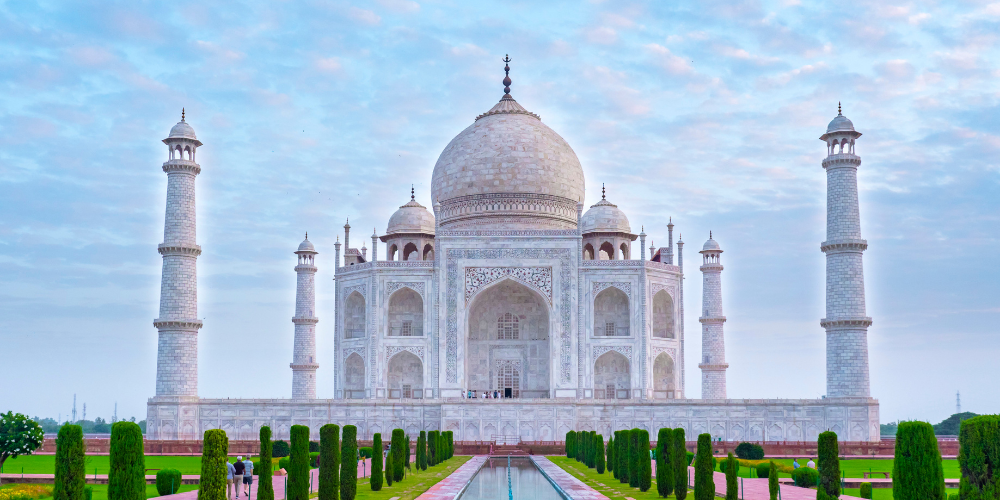
The Taj Mahal viewed from the front garden pool, showcasing its symmetrical beauty and reflection
The Taj Mahal was commissioned by Mughal Emperor Shah Jahan in memory of his beloved wife Mumtaz Mahal, who passed away during childbirth in 1631. This mausoleum was built as a tribute to their love and stands as a testament to the emperor’s grief and devotion. Construction began in 1632 and took approximately 22 years to complete, involving thousands of artisans and craftsmen from across India and Central Asia.
The monument combines elements from Persian, Islamic, and Indian architectural styles, creating a unique and harmonious design. The white marble used in its construction was sourced from Makrana in Rajasthan, and precious stones were inlaid to create intricate floral patterns and calligraphy.
The Taj Mahal’s design is carefully planned to create a sense of balance and harmony. Its most striking feature is the large white marble dome that rises gracefully above the tomb. This dome is flanked by four smaller domes and surrounded by four slender minarets, each standing at the corners of the platform.
Visitors often admire the detailed carvings and inlaid decorations that cover the walls and surfaces. The calligraphy on the entrance gates and the tomb itself features verses from the Quran, adding a spiritual dimension to the monument. The gardens surrounding the Taj Mahal follow the traditional Persian charbagh layout, divided into four parts by walkways and water channels, symbolizing paradise.
Beyond its architectural beauty, the Taj Mahal holds deep cultural and historical importance. It represents the peak of Mughal architecture and reflects the empire’s wealth and artistic achievements during the 17th century. The monument also serves as a symbol of India’s rich history and attracts scholars, historians, and tourists alike.
The Taj Mahal has inspired countless artists, poets, and writers over the centuries. Its story of love and loss resonates universally, making it a powerful symbol beyond its physical form. The monument’s preservation efforts highlight the importance of protecting cultural heritage for future generations.
Tourists visiting the Taj Mahal can explore not only the main mausoleum but also the surrounding complex, which includes a mosque, a guest house, and beautiful gardens. The best time to visit is early morning or late afternoon when the light enhances the marble’s glow and crowds are smaller.
Visitors should plan ahead to secure tickets and consider guided tours to fully appreciate the monument’s history and details. Photography is allowed in most areas, but certain restrictions apply inside the tomb to preserve its delicate interiors.
The Taj Mahal faces several challenges related to environmental pollution and tourism pressure. Air pollution from nearby industries and vehicles has caused discoloration of the white marble, prompting conservation efforts by the Indian government and international organizations.
Measures such as restricting vehicle access near the monument, using mud-pack therapy to clean the marble, and regulating visitor numbers help protect the Taj Mahal. These efforts aim to maintain its beauty and structural integrity for years to come.
The Taj Mahal continues to captivate people worldwide, not only as an architectural masterpiece but also as a symbol of enduring love and cultural identity. Its story and beauty inspire visitors to reflect on history, art, and human emotions.
For those planning a visit, the Taj Mahal offers a unique experience that combines awe-inspiring visuals with a deep connection to the past. It reminds us that great works of art and architecture can transcend time and speak to the heart across generations.

 Exciting Deals Enjoy exciting deals on flights, hotels, buses, car rental and tour packages.
 24/7 Support Get assistance 24/7 on any kind of travel related query.